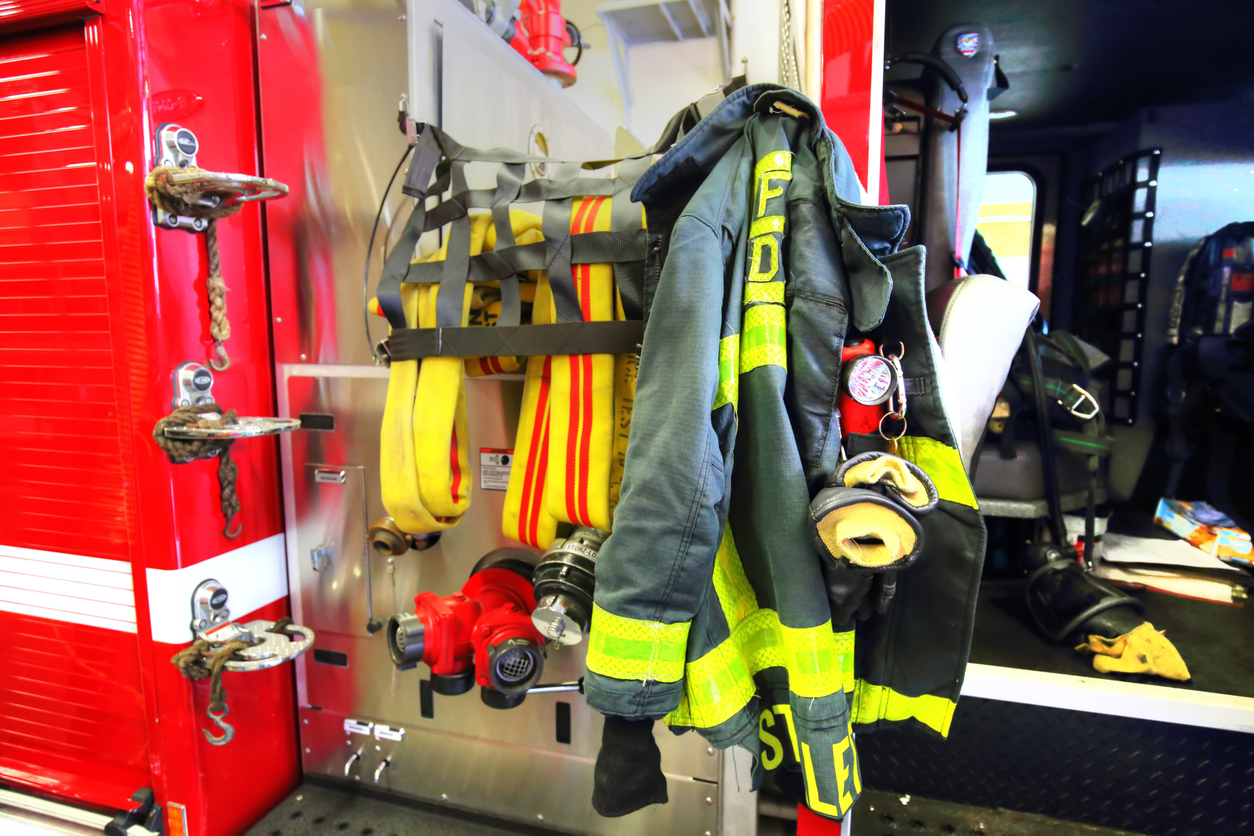
Firefighter safety doesn’t end when the fire is extinguished.
After an incident, turnout gear, SCBA, tools, and other equipment can carry contaminants back to the apparatus. Without a plan for separating contaminated equipment from crew areas, those contaminants can potentially be transferred into the cab and other spaces firefighters regularly occupy.
The clean cab concept addresses this challenge by considering contamination control as part of apparatus design.
What Does “Clean Cab” Mean?
At its core, clean cab design is about keeping potentially contaminated equipment and materials away from the areas where firefighters sit, travel, and spend time.
Instead of treating the cab as additional storage space for turnout gear and equipment, departments can create clearer separation between clean occupant areas and equipment that may have been exposed during an incident.
The goal is to make the apparatus easier to clean while reducing opportunities for cross-contamination.
Keep Contaminated Equipment Out of Crew Areas
One of the most important considerations is where turnout gear, SCBA, and other potentially contaminated equipment will be stored after a call.
Creating dedicated storage outside the cab can help prevent contaminants from being brought into occupant areas.
When planning a new apparatus, departments should consider the entire process:
Where will contaminated gear go after an incident? How will firefighters access clean equipment? Can dirty and clean equipment remain separated? Is the storage area easy to wash and maintain?
Thinking through that workflow during apparatus design can make contamination-control procedures easier for crews to follow in everyday operations.
Choose Surfaces That Are Easier to Clean
Cab materials also matter.
Fire apparatus interiors experience heavy use, and complicated surfaces, seams, fabrics, and difficult-to-reach spaces can make cleaning more challenging.
Clean cab planning can include flooring, seating materials, interior surfaces, and storage solutions selected with routine cleaning in mind.
The easier an interior is to clean, the easier it becomes for departments to incorporate decontamination into their regular operating procedures.
Think About Decontamination on Scene
Contamination control can begin before firefighters ever return to the station.
Providing a way to perform initial decontamination on scene can help remove contaminants from firefighters and equipment before they enter the apparatus.
Departments planning a new truck should consider whether their apparatus can support their decontamination procedures through equipment storage, water access, clean and dirty zones, or other department-specific requirements.
The apparatus should complement the department’s overall approach rather than forcing firefighters to work around the truck’s design.
Consider Air Quality Inside the Cab
Departments can also evaluate technologies intended to help manage the interior environment of the apparatus.
Depending on the department’s goals, options may include air filtration, air-cleaning, or other treatment systems.
Before selecting a system, departments should understand how it operates, what maintenance it requires, whether it treats air, surfaces, or both, and whether the apparatus can be occupied while the system is operating.
Technology can support a clean cab strategy, but it should be considered alongside good storage, cleaning, and contamination-control practices.
Design Around the Entire Firefighter Workflow
The strongest clean cab approach isn’t based on one feature.
It comes from looking at how firefighters move through an entire response.
Consider the journey from the station to the scene, through suppression or rescue operations, initial decontamination, equipment storage, the return trip, and final cleaning at the station.
Where can contamination move from one area to another? Where should clean and dirty equipment be separated? What features would make the department’s procedures easier to follow?
Those questions can help shape an apparatus that supports firefighter safety throughout the response cycle.
Make Clean Cab Planning Part of Your Next Apparatus
Every department approaches contamination control differently, which is why these conversations should happen early in the specification process.
Storage locations, cab materials, compartment layouts, equipment placement, and other design decisions can all be considered before the apparatus reaches production.
At Metalfab Fire Trucks, we work directly with fire departments to understand how their crews operate and incorporate their priorities into the apparatus design.
Planning your next apparatus? Talk with the Metalfab team about clean cab considerations and how your truck can be designed to support your department’s approach to firefighter safety.