When a fire department responds to an emergency, every piece of equipment needs to be ready for use. From hoses and rescue tools to medical supplies and personal protective equipment, how those items are stored can make a significant difference in how efficiently crews operate on scene.
While pump capacity, chassis selection and water storage are often top priorities when planning a new fire truck, compartment organization deserves just as much attention.
A well-designed storage layout does more than maximize available space. It helps firefighters locate equipment quickly, reduces unnecessary movement around the apparatus and supports safer handling of heavy or frequently used tools.
For departments investing in a custom fire truck, thoughtful compartment planning can improve day-to-day operations throughout the life of the apparatus.
Start With How Your Department Responds
No two fire departments have identical equipment requirements.
A rural department managing structure fires, medical emergencies and motor vehicle collisions may need a different compartment arrangement than an urban department operating specialized rescue apparatus.
Before deciding where equipment should be stored, departments should evaluate how their crews respond to emergencies.
Consider which tools are used most frequently, how many firefighters typically respond, what equipment needs to be deployed together and which side of the apparatus provides the most practical access during different types of calls.
For example, equipment used during initial fire suppression should be positioned for efficient deployment, while specialized tools used less frequently may be better suited to other compartments.
The goal is to organize equipment around the department’s actual workflow rather than simply filling available storage space.
Involving firefighters, pump operators and maintenance personnel in these discussions can provide valuable insight into what works well on existing apparatus and what could be improved.
Make Frequently Used Equipment Easy to Access
Equipment accessibility is one of the most important considerations in compartment design.
When firefighters arrive on scene, they should be able to identify and retrieve the tools they need without searching through multiple compartments or moving unrelated equipment out of the way.
This begins with thoughtful placement.
Frequently used equipment should be stored in predictable, accessible locations. Tools that are commonly deployed together can be grouped to simplify setup and reduce unnecessary trips around the apparatus.
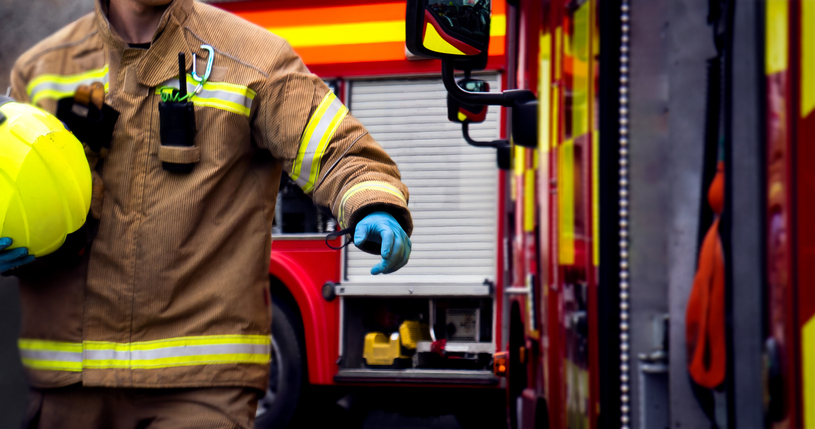
Departments should also consider how compartment doors, shelving and equipment mounts affect accessibility when firefighters are wearing full protective gear.
Storage solutions such as slide-out trays, adjustable shelving and dedicated tool mounting systems can help make better use of compartment space while keeping equipment organized.
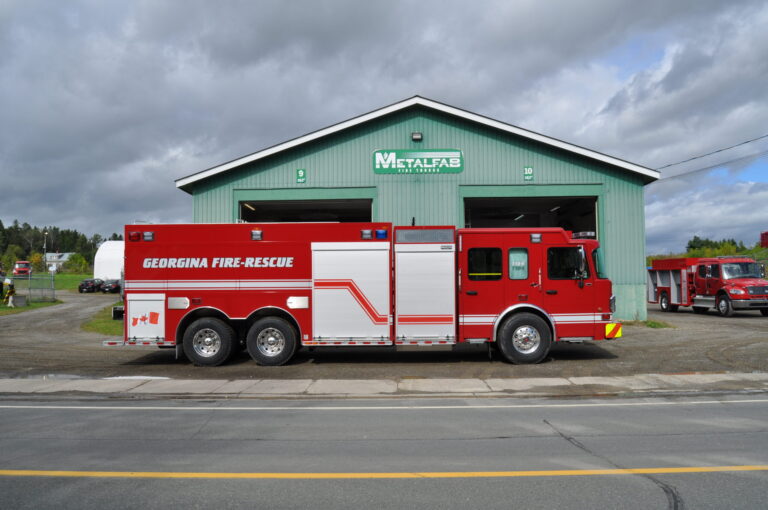
Metalfab offers customizable storage arrangements designed around each department’s equipment requirements, allowing firefighters to work with a layout that supports their response procedures.
Reduce Heavy Lifting With Ergonomic Storage
Firefighters regularly handle heavy, bulky and awkwardly shaped equipment.
Portable generators, ventilation fans, hydraulic rescue tools and other specialized equipment can be difficult to remove from deep compartments, particularly when stored above shoulder height or close to the floor.
Poor equipment placement may require excessive reaching, bending or lifting, increasing the potential for physical strain.
Ergonomic storage design helps address these challenges by considering how equipment is accessed, lifted and returned to its designated location.
Slide-out trays can bring equipment closer to the firefighter, reducing the need to reach deep into compartments. Adjustable shelving allows departments to position equipment at practical heights, while dedicated mounting systems help keep individual tools secure and accessible.
Departments should also consider the weight and dimensions of equipment when planning each compartment.
Heavier items may benefit from lower storage positions, provided firefighters can still remove them safely. Frequently used tools should be placed where they can be retrieved without unnecessary climbing or awkward movements.
Designing around the people using the apparatus is just as important as designing around the equipment itself.
Give Every Piece of Equipment a Designated Location
An organized apparatus makes it easier for firefighters to find equipment, conduct inspections and identify missing or damaged tools.
Without a clear storage plan, compartments can gradually become overcrowded or inconsistent, especially when multiple crews share the same vehicle.
Creating designated locations for equipment helps establish consistency.
Custom tool boards, mounting brackets, compartment dividers and adjustable shelves can help departments organize everything from hand tools and SCBA cylinders to medical supplies and rescue equipment.
Dedicated storage also helps prevent equipment from shifting during transport.
Properly secured tools are less likely to experience unnecessary movement or damage, and firefighters can more easily confirm that equipment has been returned after a call.
For departments with multiple apparatus or rotating crews, consistent equipment placement can also support training and familiarity.
Plan for Equipment Changes Over Time
A custom fire truck is a long-term investment, and the equipment a department carries today may not be the same equipment it needs five or ten years from now.
New rescue technologies, battery-powered tools, additional medical equipment and changing response requirements can all affect storage needs.
That makes flexibility an important part of compartment planning.
Adjustable shelving, removable dividers and adaptable mounting systems can provide departments with opportunities to reorganize equipment as operational requirements change.
Before finalizing an apparatus design, departments should inventory their current equipment and identify any anticipated purchases or service expansions.
This process should include reviewing equipment dimensions, weight, storage requirements and charging needs.
Planning ahead can help departments avoid overcrowded compartments or modifications after the apparatus enters service.
Consider the Entire Apparatus Layout
Compartment organization should not be planned in isolation.
The location of hose storage, pump controls, ladders, suction hoses and other equipment influences how firefighters move around the truck during an emergency.
A well-designed apparatus should support an efficient flow of activity around the vehicle.
For example, the placement of ladders and suction hoses should consider how firefighters will remove and deploy them. Compartments should provide practical access without creating unnecessary interference with other operations.
Metalfab offers a variety of storage configurations for its pumpers, including hose storage options and different ladder mounting arrangements.
These options allow departments to consider how equipment access, apparatus dimensions and operational requirements work together.
When storage is integrated into the overall apparatus design, departments can create a more functional layout that supports both routine operations and emergency response.
A Practical Storage Planning Checklist
Before approving a new apparatus compartment layout, fire departments should review the following questions:
- Have we completed an inventory of all equipment the apparatus will carry?
- Are frequently used tools positioned for convenient access?
- Can firefighters safely retrieve heavy equipment while wearing protective gear?
- Are tools that are commonly used together stored in logical locations?
- Is equipment properly secured for travel?
- Do compartments provide adequate space for inspections and maintenance?
- Have we considered future equipment purchases and changing operational needs?
- Have the firefighters who will use the apparatus reviewed the proposed layout?
Answering these questions early in the design process can help departments identify potential challenges before construction begins.
Custom Storage Starts With Understanding Your Department
Effective compartment organization is not simply about fitting more equipment onto a fire truck. It is about making sure the equipment firefighters rely on is accessible, secure and positioned to support the way they work.
Every department has different response demands, staffing considerations and equipment requirements.
At Metalfab Fire Trucks, customization allows departments to plan apparatus storage around those specific needs, from compartment layouts and adjustable shelving to specialized tool storage and equipment mounting.
Whether your department is replacing an existing apparatus or planning a new addition to its fleet, taking the time to evaluate equipment storage can help create a truck that supports safer, more efficient operations for years to come.
Planning your next fire truck? Contact Metalfab Fire Trucks to discuss how a custom apparatus can be designed around your department’s equipment, crew and operational requirements.